
What's the Difference Between a Logo and a Brand?
Brand Q&A for MakersThis is a common question — and one of the most important ones to get clear on early, because the confusion between the two leads a lot of creative small businesses to spend time and money in the wrong place.
Short answer: your logo is one piece of your brand. Your brand is everything else.
What a Logo Is
A logo is a mark. It's a visual symbol — a wordmark, an icon, a combination of the two — that identifies your business at a glance. It goes on your packaging, your website header, your business cards, your email signature. It's the thing people see and recognize as you.
It’s designed to be consistent and recognizable. That's its whole job. It doesn't tell your story, communicate your values, or make someone feel something on its own. It's a label on a jar — useful, necessary, but not the thing inside.
What a Brand Is
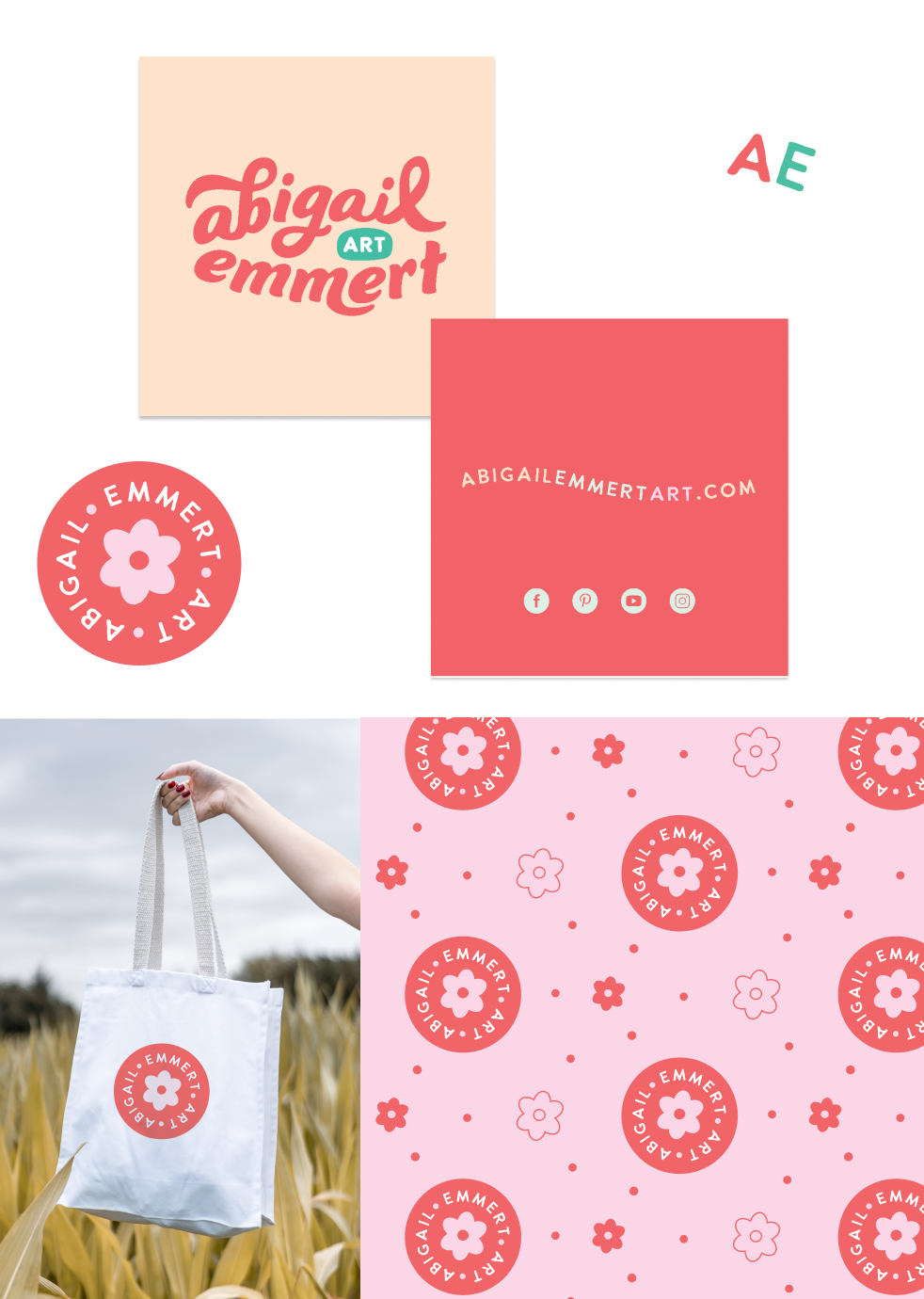
A brand is the whole experience of your business. It's the sum of every impression someone has when they encounter your work — before, during, and after a purchase.
Your brand includes your logo, yes. But it also includes:
Your visual identity — the colors you use consistently, the fonts you pair, the way your product photos are lit and styled, the aesthetic that runs through everything from your Etsy shop to your Pinterest boards to the tissue paper inside your packages.
Your voice — how you write. The words you choose in your product descriptions, your social captions, your thank-you notes, your email auto-replies. Whether you're warm or witty or minimal or poetic. Whether you say "handcrafted" or "handmade" or "made by hand in my studio." All of it is voice, and all of it is brand.
Your values — what you stand for and what you don't. Sustainable materials. Small-batch production. Made to order, not mass produced. These aren't just talking points — they're the foundation that everything else is built on.
Your customer experience — how it feels to buy from you. How fast you respond to messages. How carefully you package an order. Whether the unboxing feels considered or afterthought. This is brand in action, and it's often where the most memorable impressions are made.
Your reputation — what people say about you when you're not in the room. This is the long game version of brand, and it's built slowly, through every interaction, over time.
Why This Matters
Here's where a lot of creative businesses get stuck: they treat the logo as the starting line. They hold off on launching, or on showing up consistently, until the logo is "done." They pour energy into the mark and neglect everything around it.
But buyers don't fall in love with logos. They fall in love with the feeling a business gives them. The cohesive visual world. The voice that feels like a real person. The values they can see in the work and the way it's presented. The logo is how they remember you — but the brand is why they care.
A beautiful logo sitting on top of an inconsistent, unclear brand experience is like a perfect name tag on someone who can't hold a conversation. The label isn't the problem.
And on the flip side: a simple, even imperfect logo sitting on top of a strong, cohesive brand experience will outperform every time. Think of the makers you love whose shops feel completely them — whose photos, copy, packaging, and personality all pull in the same direction. That's brand doing its job. The logo is almost secondary.
So Which Comes First?
Brand clarity comes first. Always.
Before you design a logo — or commission one, or spend another hour on Canva tweaking one — get clear on these things:
Who you're making for. Not "everyone who loves handmade things." Specifically: who is the person who finds your work and feels like it was made for them?
What makes your work yours. Not just the materials or the technique, but the sensibility. The decisions you make that another maker in your category wouldn't. The point of view that runs through everything.
How you want people to feel. When someone lands on your shop, opens your package, reads your product description — what's the emotional experience? Calm? Delighted? Inspired? Reassured?
When you can answer those questions, you have a brand to design a logo for. The logo becomes the punctuation mark at the end of a sentence that already makes sense — not a sentence by itself.
The Practical Takeaway
If you're early in your business and don't have a logo yet: don't let that stop you. A consistent color palette, a clear font pairing, and a strong photographic style will do more for your brand right now than a logo will. (We wrote about exactly this in Brand Q&A #1 — Do I Need a Logo Before I Open My Etsy Shop? →)
If you have a logo but something still feels off: the logo probably isn't the problem. Look at the whole picture — your colors, your photos, your voice, your values. The logo will feel right when everything around it does.
Build the brand. The logo will follow.
Have a branding question you'd like answered? This series is for you — send it our way.
